Spanish
When was the Colosseum Built?

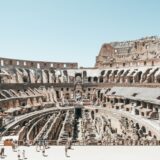
The Colosseum, one of the most famous and iconic structures of ancient Rome, was built between 70-80 AD. It is officially known as the Flavian Amphitheatre, named after the Flavian dynasty of emperors who commissioned its construction, specifically by the emperor Vespasian, who came to power in 69 AD, and was completed by his successor and son Titus.
The Colosseum was built on the site of an earlier amphitheater, known as the Statilus amphitheater, which had been built by Emperor Nero in 57 AD. However, the Statilus amphitheater was small in comparison to the Colosseum, and it was also located on low-lying ground that was prone to flooding. Therefore, Emperor Vespasian, who came to power in 69 AD, decided to demolish the old amphitheater and build a new one in its place.
The construction of the Colosseum was funded through spoils taken during the Jewish War, which was fought from 66-70 AD. The war resulted in the destruction of the Second Temple in Jerusalem and the subjugation of the Jewish people by the Roman Empire. The spoils taken during the war, which included valuable treasures and precious metals, were used to fund a number of building projects in Rome, including the Colosseum.
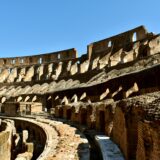
The Colosseum was designed by architects and engineers who were experts in the field of construction. They used innovative techniques and materials to create a structure that was both durable and aesthetically pleasing. The elliptical shape of the Colosseum was designed to maximize seating capacity, and the four levels of seating were supported by a complex system of arches and columns. The seating areas were divided into different sections based on social status, with the most prestigious seats reserved for the emperor and his family.
Table of Contents
ToggleHow long did the Colosseum take to build?
The construction of the Colosseum was a massive undertaking, and it required thousands of laborers, slaves, and prisoners of war to complete. The structure itself was massive, with an elliptical shape and four levels of seating that could accommodate up to 50,000 spectators. The outer walls of the Colosseum were made of stone and concrete, and the seating areas were made of wood.
The construction of the Colosseum took around ten years to complete, and it was inaugurated in 80 AD by Emperor Titus, Vespasian’s son, and successor. The inaugural games were a lavish affair, featuring a hundred days of games and spectacles, including gladiatorial contests, animal hunts, and naval battles.
The Colosseum quickly became a popular venue for public entertainment, and it remained in use for centuries. However, over time, the building fell into disrepair, and it was used for a variety of purposes, including as a quarry for building materials. Nevertheless, the building’s enduring legacy as an architectural masterpiece and a symbol of ancient Rome has ensured that it has survived to the present day.
Who built the Colosseum?
The Colosseum, also known as the Flavian Amphitheatre, was built during the reign of the Emperor Vespasian, of the Flavian dynasty, in Rome, Italy. The construction of the Colosseum began in 70 AD and was completed during the reign of Vespasian’s son and successor, Titus, in 80 AD. The Colosseum was built as a gift to the Roman people, as a symbol of the power and wealth of the Flavian dynasty, and to host public spectacles and games for the entertainment of the people.
Titus was a Roman emperor who ruled from 79 to 81 AD. He was the son of the Emperor Vespasian and succeeded his father as the ruler of the Roman Empire. Titus is best known for his military campaigns, his role in the construction of the Colosseum, and his response to natural disasters that occurred during his reign.
Conclusion
Today, the Colosseum is one of the most popular tourist destinations in Italy, with millions of visitors flocking to see it each year. It has been designated a UNESCO World Heritage site and has become an important cultural and historical landmark.
Ready to step into the pages of history and witness the timeless beauty of the Colosseum? Book your ticket now and embark on an unforgettable journey to ancient Rome. Explore the monumental architecture and immerse yourself in the rich heritage of this iconic landmark. Don’t miss this opportunity to experience firsthand the awe-inspiring grandeur of the Colosseum, built over 2,000 years ago.