Spanish
How big is the Colosseum?
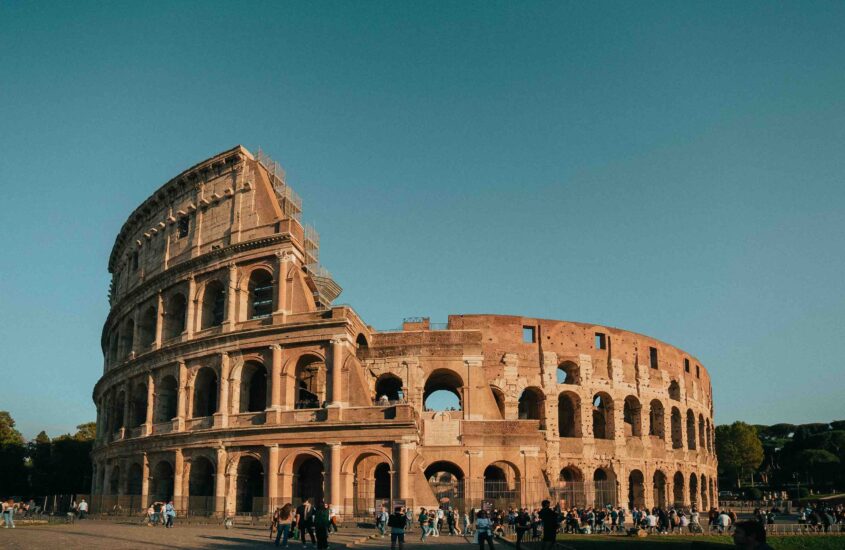
The Colosseum, also known as the Flavian Amphitheatre, is an iconic symbol of Rome’s grandeur and architectural prowess. It was constructed nearly 2,000 years ago and remains one of the most impressive feats of engineering and design from the ancient world. The Colosseum is an enduring testament to the glory of Rome and is considered one of the greatest tourist attractions in Italy.
Size of Colosseum
The Colosseum is situated in the heart of Rome, Italy, and covers an area of approximately 6 acres. It stands at an imposing height of 48 meters, and its elliptical shape measures 188 meters long and 156 meters wide. The arena itself is oval in shape and measures 86 meters by 54 meters, which is equivalent to the size of a modern football field.

How many people could the Colosseum hold?
The Colosseum was built to accommodate large crowds of up to 80,000 spectators, who came to witness the gladiatorial contests and other public spectacles. The seating arrangements were carefully designed to ensure that every spectator had a clear view of the arena. The Colosseum was divided into four levels, with each level housing different social classes of the Roman society. The lower levels were reserved for the emperor, the senators, and other important dignitaries, while the upper levels were for the common people.
The Colosseum’s architecture was designed to facilitate the various activities that took place within its walls. The structure was built using travertine stone, which was quarried from nearby Tivoli. The walls of the Colosseum are up to 57 meters high, and its façade is decorated with columns and arches, which add to its grandeur. The structure’s innovative design features included retractable awnings, which were used to provide shade for the spectators on sunny days.
The Colosseum’s most impressive feature is its intricate system of underground tunnels, which were used to transport gladiators, animals, and props to the arena. These tunnels were also used to provide ventilation to the structure, which was important during the hot summer months. The Colosseum also had a complex network of water channels, which were used to flood the arena and simulate naval battles for the spectators.
Despite its impressive size and architectural design, the Colosseum has suffered damage over the centuries. It was damaged by a series of earthquakes in the 5th and 6th centuries and was also used as a quarry for building materials during the Middle Ages. However, much of the structure remains intact, and it continues to be a testament to Rome’s grandeur and architectural legacy.
Conclusion
In conclusion, the Colosseum is an awe-inspiring architectural wonder that continues to draw visitors from all over the world. Its sheer size and intricate design are a testament to the ingenuity of the ancient Romans, and its enduring legacy is a testament to Rome’s lasting impact on Western civilization. The Colosseum is a must-see attraction for anyone visiting Rome, and it will continue to be a symbol of Rome’s greatness for generations to come.
Ready to witness the sheer magnitude of the Colosseum in person? Book your ticket now and immerse yourself in the colossal wonders of ancient Rome. Marvel at the monumental architecture and envision the gladiatorial battles that once took place within its walls. Don’t miss this opportunity to experience the awe-inspiring size and scale of the Colosseum firsthand.